
 兰州大学
兰州大学 English
 zyhjxy@lzu.edu.cn

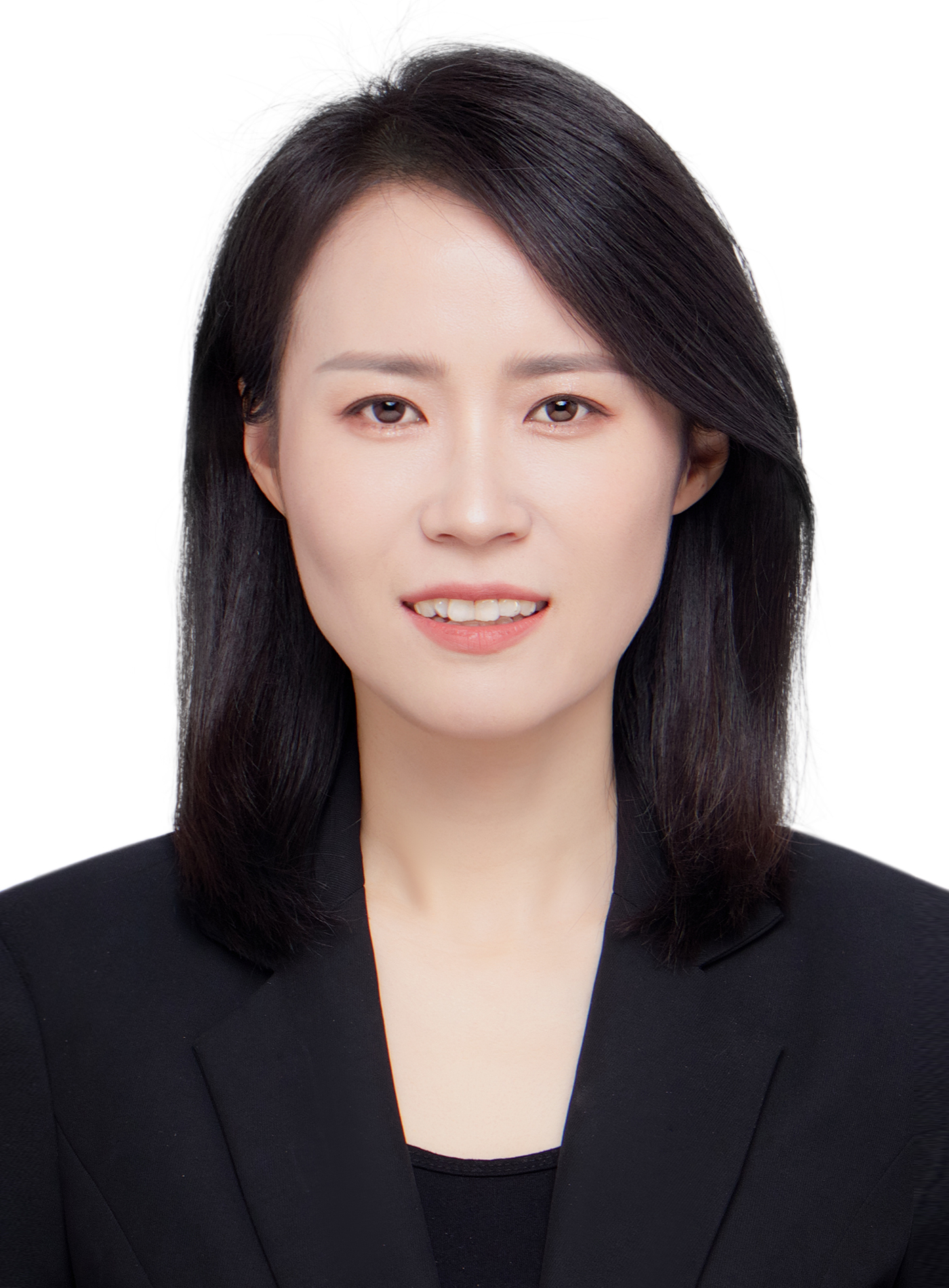
姓名:牟翠翠
职称: 教授 博士生导师 硕士生导师
性别:女
毕业院校:中国科学院寒区旱区环境与工程研究所
学历:研究生
学位:博士
在职信息:在职
所在单位:地球系统科学研究所
入职时间:2014年7月
办公地点:观云楼1412
电子邮箱:mucc@lzu.edu.cn
学习经历
2004-2008,青岛科技大学,理学学士
2008-2011,上海大学,理学硕士
2012,美国科罗拉多地质调查局(USGS),联合培养
2011-2014,中国科学院寒区旱区环境与工程研究所,理学博士
研究方向
多年冻土碳氮生物地球化学过程,冰冻圈环境与可持续发展
工作经历
2014-至今:兰州大学资源环境学院
曾在美国科罗拉多大学、阿拉斯加大学访学
主讲课程
本科生课程:《冰冻圈科学概论》(国家级一流本科课程)、《地球科学概论》
研究生课程:《气候变化科学概论》、《冰冻圈科学前沿进展》
学术兼职
甘肃省祁连山冻土与生态环境野外科学观测研究站站长
兰州大学冰冻圈科学研究中心主任
政府间气候变化专门委员会(IPCC)第六次评估报告贡献作者
北极理事会的《北极监测与评估工作组报告》(AMAP)贡献作者
《Science Bulletin》、《Journal of Environmental Quality》编委
《冰川冻土》、《寒旱区科学》编委
《中国大百科全书》第三版冰冻圈科学专题分支副主编
中国冰冻圈科学学会常务理事、教育工作委员会主任
中国地理学会冻土与寒区工程专业委员会副主任
国际数字地球学会中委会数字极地专委会常委委员
研究成果
主要从事多年冻土生态环境效应研究,创建了祁连山(海拔3600-4500 m)气候-植被-冻土-碳循环综合监测网,在青藏高原和北极冻土碳循环、热喀斯特碳排放调控机制、陆-水系统碳动态等方面取得了一系列研究成果。在国内外期刊上发表论文110篇,包括第一/通讯作者在Nat Commun、Glob Change Biol、Environ Sci Technol、Water Research、Earth Sci Rev、ISPRS J Photogramm Remote Sens、Earths Future、Global Biogeochem Cycles、Geophys Res Lett等重要期刊上发表论文。
获得荣誉
2020年度教育部“长江学者奖励计划”青年学者
2021年第十届甘肃青年科技奖
2021年第十三届青藏高原青年科技奖
2021年甘肃省领军人才(第二层次)
2023年甘肃省巾帼建功标兵荣誉称号
2022年兰州大学“国华青年英才奖”
2017年国际冰冻圈科学协会(IACS)“最佳青年报告奖”
2017年施雅风冰冻圈与环境基金青年科学家奖
在研项目
1. 中央高校青年教师科研创新能力支持项目(U40):气候变化对多年冻土碳循环的影响与调控(SRICSPYF-ZY2025149),项目负责人,2026/01-2030/12
2. 国家自然科学基金委区域创新发展联合重点项目:祁连山多年冻土变化及碳汇效应对气候变化的响应(U25A20762),项目负责人,2026/01-2029/12
3. 国家重点研发计划青年科学家项目:青藏高原多年冻土退化对泥炭地甲烷排放的影响(2024YFF0810900),项目负责人,2024/12-2027/11
4. 国家自然科学基金委面上项目:青藏高原季节性热融湖塘甲烷排放及微生物作用研究(42371132),项目负责人,2024/01-2027/12
5. 甘肃省基础研究创新群体项目:青藏高原典型多年冻土区土壤碳库对全球变化的响应及机理(23JRRA1171),项目负责人,2023/07-2026/06
6. 国家重点研发计划项目:北极快速变化的机理、影响及其气候效应研究(2019YFA0607003),课题负责人,2019/11-2024/10
7. 国家自然科学基金委面上项目:青藏高原中部热融湖塘温室气体排放季节变化规律及机理研究(41871050),项目负责人,2019/01-2022/12
8. 第二次青藏高原综合科学考察研究,任务六专题五:跨境污染物调查与环境安全(2019QZKK0605),子子专题负责人,2019/11-2022/10
9. 国家自然科学基金委青年项目:热融滑塌对高寒草甸区土壤有机碳分解及温室气体排放的影响-以俄博岭多年冻土区为例(41601063),项目负责人,2017/01-2019/12
发表论文
代表论文:
53. Liu, F., Li, K., Mu, C.*, Mu, M., Zhang, C., Du, X., Ge, Y., Lei, P., Jia, Y., Liu, H., Li, S., Jin, X., and Jin, Y. 2026. Divergent Determinants on Carbon and Nitrogen Exports From Major Arctic Rivers. Water Resources Research, 62, e2025WR042756.
52. Jia, Y., Zhang, C., Mu, M., Du, X., Song, J., Wei, Y., Ge, Y., Li, K., Liu, H., Lei, P., Peng, X., Xia, Z., Huang, L., Liu, R., Wangchuk, S., Yang, Y., Liu, L., and Mu, C.*. 2026. Abrupt permafrost thaw drives exceptional carbon release across the Tibetan Plateau. Nature Communications, 17, 8050.
51. Mu, M., Mu, C.*, Liu, H., Song, J., Du, X., Ge, Y., Lei, P., Mo, X., Wei, Y., Zhang, C., and Zhao, C. 2026. Microbial Reduction of Methane Emissions from High-Altitude Thermokarst Lakes. Environmental Science & Technology, 60, 20939-20950.
50. Dou, T., Mu, C.*, Xue, S., Song, J., Li, K., Wei, Y., Mo, X., Peng, X., and Fan, C. 2026. A new vegetation type dataset in their distribution and changes across the circumpolar Arctic permafrost regions. Ecological Indicators, 189, 115094.
49. Du, X., Zhang, C., Jia, Y., Wei, Y., Song, J., Mu, M., Peng, X., Li, Z. *, Zhang, P. *, Liu, L., Xia, Z., Liu, R., Wangchuk, S., Zhang, X., Hjort, J., and Mu, C.*. 2026. Permafrost degradation amplifies infrastructure-related inequalities across the Qinghai-Tibet Plateau. Global Environmental Change, 99, 103170.
48. Song, J., Mu, C.*, Mu, M., Jia, Y., Li, K., Wei, Y., Dou, T., Mo, X., Lei, P., Du, X., Liu, R., and Wangchuk, S. 2026. Impacts of permafrost degradation on the richness of human-used plant species in the High Mountain Asia. The Innovation Geoscience, 4, 100221.
47. Li, Q., Peng, X. *, Frauenfeld, O. W., Wu, Z., Wang, Y., and Mu, C.*. 2026. Extreme rainfall reshapes permafrost thermal regimes across the Northern Hemisphere. Nature Communications, 17, 3204.
46. Shi, M., Mu, C.*, Zhou, B. *, Li, X. *, Ma, Y., Mu, M., Song, J., Du, X., and Zhou, H. 2026. Species-dependent growth rates regulate community biomass under long-term warming and wetting in alpine meadow on the Qinghai-Tibet Plateau. Plant and Soil, doi: 10.1007/s11104-026-08516-5, 2026. 1-16.
45. Peng, X.*, Luo, H., Tian, W., Xia, Z., Frauenfeld, O. W., Mu, C.*, Liu, L.*, Luo, J., Huang, L., Zhao, Q., and Yin, Y. 2026. Underestimated small thermokarst lakes of the Qinghai-Tibet Plateau and their carbon emission potential. Global and Planetary Change, 261, 105411.
44. Lu, X., Liu, X., Yang, Z., Li, L., Yang, M., Liu, Y.-R., Gu, B., and Mu, C.*. 2026. Unravelling methylmercury formation in high-altitude Tibetan thermokarst lakes. Journal of Hazardous Materials, 503, 141183.
43. Zhang, G.*, Mu, C.*, Zhang, Y., Zhu, X., Zhao, Y., and Nan, Z. 2026. Quantifying the impacts of increasing light and moderate rainfall on permafrost thermal regimes over the Qinghai-Tibet Plateau: A controlled sensitivity study. Journal of Hydrology, 667, 134926.
42. Wei, Y., Mu, C.*, Chen, D.*, Mo, X., Elberling, B., Zhang, W., Zhang, G., Zhang, C., Li, K., Li, X., Shi, M., Mu, M., Wang, X., Wei, D., Dou, T., Du, X., Peng, X., Jin, Y., Xiao, J., and Ciais, P. 2026. Global warming driving increased winter CO2 emissions in the Northern Hemisphere permafrost region. The Innovation Geoscience, 4, 100185.
41. Liu, H., Mu, C.*, Mu, C., Li, K., Wei, Y., Lei, P., Liu, F., Du, X., Li, S., and Li, J. 2026. Aridity controls on the dominance of soil mineral-associated and particulate organic carbon in the Qinghai-Tibet Plateau. Global and Planetary Change, 256, 105145.
40. Mu, C.*, Li, K., Liu, S., Wei, Y., Mu, M., Shang, X., Liu, F., Zhang, C., Liu, H., Gao, T., Song, C., Zhang, L., and Karlsson, J. 2025. Recent intensified riverine CO2 emission across the Northern Hemisphere permafrost region. Nature Communications, 16, 3616.
39. Mu, C.*, Lei, P., Mu, M., Zhang, C., Zhou, Z., Song, J., Jia, Y., Fan, C., Peng, X., Zhang, G., Yang, Y., Wang, L., Li, D., Song, C., Wang, G., and Zhang, Z. 2025. Methane emissions from thermokarst lakes must emphasize the ice-melting impact on the Tibetan Plateau. Nature Communications, 16, 2404.
38. Mu, M., Mu, C.*, Liu, H., Lei, P., Ge, Y., Zhou, Z., Peng, X., and Ma, T. 2025. Thermokarst lake drainage halves the temperature sensitivity of CH4 release on the Qinghai-Tibet Plateau. Nature Communications, 16, 1992.
37. Fan, C., Mu, C.*, Liu, L.*, Zhang, T., Jia, S., Wang, S., Sun, W., and Zhao, Z. 2025. Time-Series models for ground subsidence and heave over permafrost in InSAR Processing: A comprehensive assessment and new improvement. ISPRS Journal of Photogrammetry and Remote Sensing, 222, 167-185.
36. Fan, C., Liu, L., Zhao, Z., and Mu, C.*. 2025. Pronounced Underestimation of Surface Deformation Due To Unwrapping Errors Over Tibetan Plateau Permafrost by Sentinel-1 InSAR: Identification and Correction. Journal of Geophysical Research: Earth Surface, 130, e2024JF007854.
35. Mu, C.*, Song, J., Liu, H., Peng, X., Zheng, L., Gao, Z., Sun, H., Fan, C., Mu, M., and Guo, L. 2024. Impacts of increasing land-ocean interactions on carbon cycles in the Arctic. Earth Critical Zone, 1, 100010.
34. Peng, X., Frauenfeld, O. W., Huang, Y., Chen, G., Wei, G., Li, X., Tian, W., Yang, G., Zhao, Y., and Mu, C.*. 2024. The thermal effect of snow cover on ground surface temperature in the Northern Hemisphere. Environmental Research Letters, 19, 044015.
33. Xia, Z., Liu, L.*, Mu, C.*, Peng, X., Zhao, Z., Huang, L., Luo, J., and Fan, C. 2024. Widespread and Rapid Activities of Retrogressive Thaw Slumps on the Qinghai-Tibet Plateau From 2016 to 2022. Geophysical Research Letters, 51, e2024GL109616.
32. Mu, M., Mu, C.*, Liu, H., Zhang, C., Jia, Y., Lei, P., and Peng, X. 2024. Decline of CO2 Release During the Evolution of the Thaw Slump on the Northern Qinghai-Tibet Plateau. Journal of Geophysical Research: Biogeosciences, 129, e2024JG008162.
31. Mu, M., Mu, C.*, Liu, H., Qiao, Y., Zhu, Y., Jia, Y., Fan, C., Zhang, G., and Peng, X. 2024. Topographic Drivers of Permafrost Organic Carbon Accumulation on the Northern Qinghai–Tibet Plateau. Permafrost and Periglacial Processes, 35, 373-383.
30. Mu, C.*, Mo, X., Qiao, Y., Chen, Y., Wei, Y., Mu, M., Song, J., Li, Z., Zhang, W., Peng, X., Zhang, G., Zhuang, Q., and Aurela, M. 2023. Ecosystem CO2 Exchange and Its Economic Implications in Northern Permafrost Regions in the 21st Century. Global Biogeochemical Cycles, 37, e2023GB007750.
29. Zhao, W., Mu, C.*, Han, L., Sun, W., Sun, Y., and Zhang, T. 2023. Spatial and temporal variability in snow density across the Northern Hemisphere. Catena, 232, 107445.
28. Peng, X., Zhang, T., Frauenfeld, O. W., Mu, C.*, Wang, K., Wu, X., Guo, D., Luo, J., Hjort, J., Aalto, J., Karjalainen, O., and Luoto, M. 2023. Active Layer Thickness and Permafrost Area Projections for the 21st Century. Earth's Future, 11, e2023EF003573.
27. Zhang, G., Mu, C.*, Nan, Z., Wu, X., and Cheng, G. 2023. Elevation dependency of future degradation of permafrost over the Qinghai-Tibet Plateau. Environmental Research Letters, 18, 075005.
26. Mu, M., Mu, C.*, Liu, H., Chi, H., Zhu, Y., Shang, J., Fan, C., Wu, X., and Zhang, G. 2023. Carbon loss and emissions within a permafrost collapse chronosequence. Catena, 231, 107291.
25. Mu, C.*, Mu, M., Wu, X., Jia, L., Fan, C., Peng, X., Ping, C.-L., Wu, Q., Xiao, C., and Liu, J. 2023. High carbon emissions from thermokarst lakes and their determinants in the Tibet Plateau. Global Change Biology, 29, 2732-2745.
24. Mu, M., Mu, C.*, Lei, P., Mo, X., Qiao, Y., Chen, X., and Liu, H. 2023. Thermokarst lake changes along the Qinghai-Tibet Highway during 1991–2020. Geomorphology, 441, 108895.
23. Peng, X., Zhang, T., Frauenfeld, O. W., Wang, K., and Mu, C.*. 2022. An integrated index of cryospheric change in the Northern Hemisphere. Global and Planetary Change, 218, 103984.
22. Peng, X., Zhang, T., Frauenfeld, O. W., Du, R., Jin, H., and Mu, C.*. 2021. A Holistic Assessment of 1979–2016 Global Cryospheric Extent. Earth's Future, 9, e2020EF001969.
21. Li, Z.L., Mu, C.*, Chen, X., Wang, X.Y., Dong, W.W., Jia, L., Mu, M., Streletskaya, I., Grebenets, V., Sokratov, S., Kizyakov, A., and Wu, X.-D. 2021. Changes in net ecosystem exchange of CO2 in Arctic and their relationships with climate change during 2002–2017. Advances in Climate Change Research, 12, 475-481.
20. Mu, C.*, Abbott, B. W., Norris, A. J., Mu, M., Fan, C., Chen, X., Jia, L., Yang, R., Zhang, T., Wang, K., Peng, X., Wu, Q., Guggenberger, G., and Wu, X. 2020. The status and stability of permafrost carbon on the Tibetan Plateau. Earth-Science Reviews, 211, 103433.
19. Mu, C.*, Shang, J., Zhang, T., Fan, C., Wang, S., Peng, X., Zhong, W., Zhang, F., Mu, M., and Jia, L. 2020. Acceleration of thaw slump during 1997–2017 in the Qilian Mountains of the northern Qinghai-Tibetan plateau. Landslides, 17, 1051-1062.
18. Mu, C.*, Zhang, F., Mu, M., Chen, X., Li, Z., and Zhang, T. 2020. Organic carbon stabilized by iron during slump deformation on the Qinghai-Tibetan Plateau. Catena, 187, 104282.
17. Mu, C.*, Schuster, P. F., Abbott, B. W., Kang, S., Guo, J., Sun, S., Wu, Q., and Zhang, T. 2020. Permafrost degradation enhances the risk of mercury release on Qinghai-Tibetan Plateau. Science of the Total Environment, 708, 135127.
16. Mu, C.*, Zhang, F., Chen, X., Ge, S., Mu, M., Jia, L., Wu, Q., and Zhang, T. 2019. Carbon and mercury export from the Arctic rivers and response to permafrost degradation. Water Research, 161, 54-60.
15. Mu, C., Li, L., Wu, X., Zhang, F., Jia, L., Zhao, Q., and Zhang, T. 2018. Greenhouse gas released from the deep permafrost in the northern Qinghai-Tibetan Plateau. Scientific Reports, 8, 4205.
14. Mu, C., Li, L., Zhang, F., Li, Y., Xiao, X., Zhao, Q., and Zhang, T. 2018. Impacts of permafrost on above- and belowground biomass on the northern Qinghai-Tibetan Plateau. Arctic, Antarctic, and Alpine Research, 50, e1447192.
13. Mu, C., Abbott, B.W., Wu, X., Zhao, Q., Wang, H., Su, H., Wang, S., Gao, T., Guo, H., Peng, X., and Zhang, T. 2017. Thaw Depth Determines Dissolved Organic Carbon Concentration and Biodegradability on the Northern Qinghai-Tibetan Plateau. Geophysical Research Letters, 44, 9389-9399.
12. Mu, C., Abbott, B. W., Zhao, Q., Su, H., Wang, S., Wu, Q., Zhang, T., and Wu, X. 2017. Permafrost collapse shifts alpine tundra to a carbon source but reduces N2O and CH4 release on the northern Qinghai-Tibetan Plateau. Geophysical Research Letters, 44, 8945-8952.
11. Mu, C., Zhang, T., Zhao, Q., Su, H., Wang, S., Cao, B., Peng, X., Wu, Q., and Wu, X. 2017. Permafrost affects carbon exchange and its response to experimental warming on the northern Qinghai-Tibetan Plateau. Agricultural and Forest Meteorology, 247, 252-259.
10. Mu, C., Wu, X., Zhao, Q., Smoak, J. M., Yang, Y., Hu, L., Zhong, W., Liu, G., Xu, H., and Zhang, T. 2017. Relict Mountain Permafrost Area (Loess Plateau, China) Exhibits High Ecosystem Respiration Rates and Accelerating Rates in Response to Warming. Journal of Geophysical Research: Biogeosciences, 122, 2580-2592.
9. Mu, C., Zhang, T., Wu, Q., Peng, X., Zhang, P., Yang, Y., Hou, Y., Zhang, X., and Cheng, G. 2016. Dissolved organic carbon, CO2, and CH4 concentrations and their stable isotope ratios in thermokarst lakes on the Qinghai-Tibetan Plateau. Journal of Limnology, 75, 313-319.
8. Mu, C., Zhang, T., Zhang, X., Cao, B., Peng, X., Cao, L., and Su, H. 2016. Pedogenesis and physicochemical parameters influencing soil carbon and nitrogen of alpine meadows in permafrost regions in the northeastern Qinghai-Tibetan Plateau. Catena, 141, 85-91.
7. Mu, C., Zhang, T., Zhang, X., Li, L., Guo, H., Zhao, Q., Cao, L., Wu, Q., and Cheng, G. 2016. Carbon loss and chemical changes from permafrost collapse in the northern Tibetan Plateau. Journal of Geophysical Research: Biogeosciences, 121, 1781-1791.
6. Mu, C., Zhang, T., Zhang, X., Cao, B., and Peng, X. 2016. Sensitivity of soil organic matter decomposition to temperature at different depths in permafrost regions on the northern Qinghai-Tibet Plateau. European Journal of Soil Science, 67, 773-781.
5. Mu, C., Zhang, T., Zhao, Q., Guo, H., Zhong, W., Su, H., and Wu, Q. 2016. Soil organic carbon stabilization by iron in permafrost regions of the Qinghai-Tibet Plateau. Geophysical Research Letters, 43, 10,286-210,294.
4. Mu, C., Zhang, T., Wu, Q., Peng, X., Cao, B., Zhang, X., Cao, B., and Cheng, G. 2015. Editorial: Organic carbon pools in permafrost regions on the Qinghai–Xizang (Tibetan) Plateau. The Cryosphere, 9, 479-486.
3. Mu, C., Zhang, T., Wu, Q., Cao, B., Zhang, X., Peng, X., Wan, X., Zheng, L., Wang, Q., and Cheng, G. 2015. Carbon and nitrogen properties of permafrost over the Eboling Mountain in the upper reach of Heihe River basin, northwestern China. Arctic, Antarctic, and Alpine Research, 47, 203-211.
2. Mu, C., Zhang, T., Schuster, P. F., Schaefer, K., Wickland, K. P., Repert, D. A., Liu, L., Schaefer, T., and Cheng, G. 2014. Carbon and geochemical properties of cryosols on the North Slope of Alaska. Cold Regions Science and Technology, 100, 59-67.
1. Mu, C., Zhang, T., Wu, Q., Zhang, X., Cao, B., Wang, Q., Peng, X., and Cheng, G. 2014. Stable carbon isotopes as indicators for permafrost carbon vulnerability in upper reach of Heihe River basin, northwestern China. Quaternary International, 321, 71-77.
出版著作
《冻土环境生态学》(甘肃省“十四五”普通高等教育规划教材)
《冰冻圈化学》
《青藏高原东北部黄河流域水碳过程与人类活动》